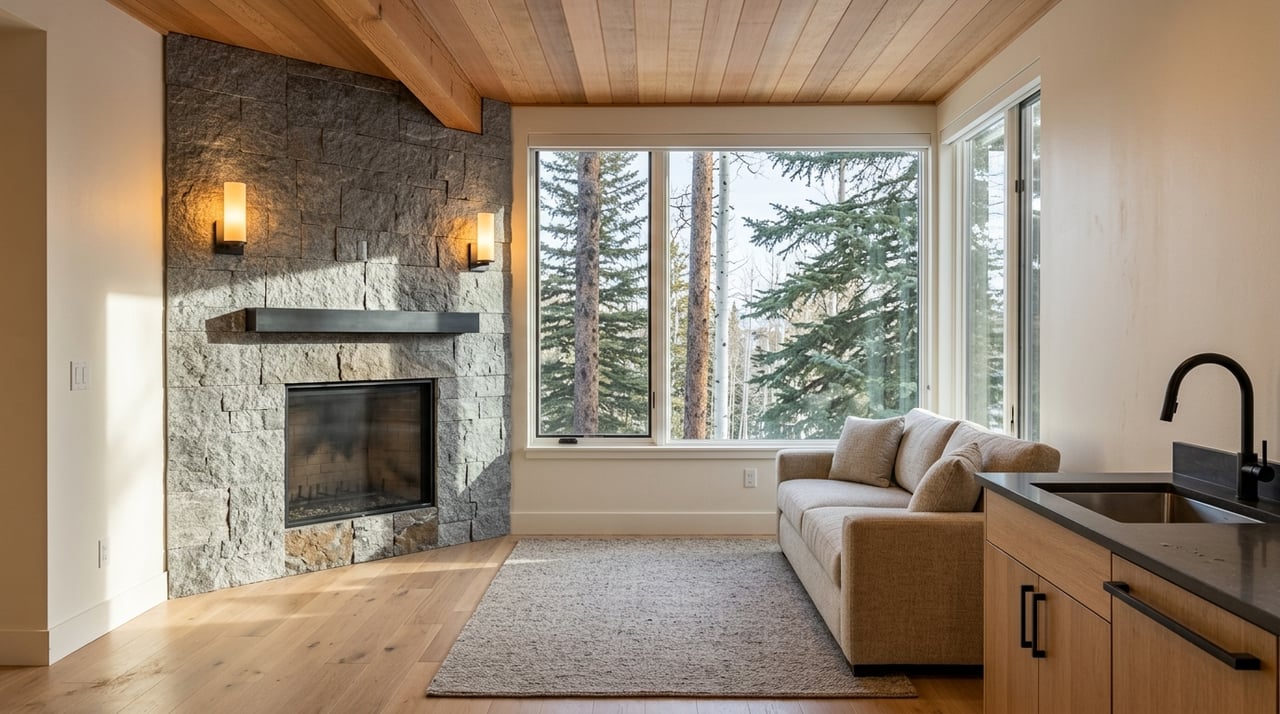
Guide to the Schweitzer Short Term Rental Market
April 16, 2026
April 16, 2026
If you are thinking about buying at Schweitzer with short-term rental income in mind, one question matters more than almost anything else: Can this property actually be rented the way you expect? At a mountain resort, the answer is rarely as simple as "yes" or "no." You need to look at county rules, community documents, property operations, and seasonality before you buy. This guide will help you understand the main issues so you can evaluate a Schweitzer property with more confidence. Let’s dive in.
Schweitzer is not a typical year-round suburban rental market. It operates as a true mountain-resort destination with a winter season that usually runs from late November to early or mid-April, plus a summer season from late June through Labor Day, according to Schweitzer resort stats and information. The resort also reports about 300 inches of average annual snowfall, which shapes everything from access and parking to guest demand.
That four-season resort setting matters when you are underwriting a purchase. Schweitzer also keeps some guest-facing services available year-round, including dining, spa service, and property management, which supports second-home and vacation-rental ownership in a way many mountain areas do not. In other words, you are buying into a resort ecosystem, not just a house near a ski hill.
County planning materials also show resort-area land at Schweitzer Mountain Road within an Alpine Village zoning context. Bonner County describes Alpine Village as a district intended for high-elevation recreational development and private or commercial resorts, as outlined in this Bonner County staff report. For buyers, that helps explain why short-term rental questions here are closely tied to resort land use and not just standard residential rules.
Before you review nightly rates or rental projections, confirm which local jurisdiction applies. Bonner County states that its vacation rental rules apply in unincorporated county areas, while Sandpoint has a separate short-term rental program that applies only inside city limits, as explained on the county’s vacation rental page and the city’s STR program page.
That distinction matters because the rules are not interchangeable. Many Schweitzer-area properties buyers ask about will fall under Bonner County, but you should never assume. One of the first due-diligence steps is confirming whether the property is in unincorporated Bonner County or within Sandpoint city limits.
If your target property is in unincorporated Bonner County, the county says a Vacation Rental Permit is required. Under county code, no dwelling may be used as a vacation rental until that permit is approved, according to the Bonner County code provisions.
That permit is annual, and it is tied to the owner. It also expires upon sale, which means you should not assume the seller’s permit automatically transfers to you. If rental income is part of your buying strategy, timing for your post-closing permit process matters.
There is also a narrow exception for standard dwellings rented without a permit for up to 14 days per calendar year in no more than two stays. For most buyers who want consistent short-term rental use, that exception will not be enough. You should underwrite the property as though full permit compliance is required.
Bonner County sets maximum occupancy at two persons per bedroom plus two more, capped at 20 total unless a separate high-occupancy review applies. The county also ties occupancy to parking, requiring one off-street parking space for each three occupants and prohibiting on-street parking, as detailed in the county code.
At Schweitzer, this is more than a paperwork issue. Winter weather, plowing, snow storage, and steep-site access can all affect how practical your parking plan really is. A property that looks rentable on paper can become much harder to operate if guest vehicles are difficult to accommodate.
Bonner County also requires a local representative who lives within 90 minutes of the property, unless that role is handled by a property management company, resort, or bed-and-breakfast operator. This is especially important for out-of-area buyers who do not plan to self-manage. It is one of the reasons professional management is often part of the Schweitzer ownership conversation.
The county requires weekly trash collection for vacation rentals. It can also revoke a permit after three violations within 12 months, and a failing septic system triggers permit suspension under the same county rules.
For mountain properties, these operational details matter. Septic capacity, snow-season access, and neighbor complaints can affect your real-world ability to keep a rental running smoothly. This is why a property’s rental potential should be measured by operations as much as by location.
One of the biggest buyer mistakes at resort properties is stopping after zoning review. Bonner County specifically says it does not enforce HOA rules or CC&Rs, as noted in the county’s vacation rental guidance. That means county approval alone does not guarantee that short-term rentals are allowed under the property’s recorded community documents.
At Schweitzer, this issue is especially important. The Schweitzer Mountain Community Association states that it provides architectural review and enforces community rules and regulations. In practical terms, a home can be county-compliant and still face restrictions under an HOA or planned unit development document.
For buyers, that means you should review:
This step should happen before closing, not after. Bonner County also notes in its planning FAQ that Idaho is a buyer-beware state, which makes document review especially important.
If you live outside the area, management support may be a major part of your decision. Schweitzer’s Property Management services advertise rental management, 24-hour front desk service, housekeeping, maintenance, condo accounting, year-round reservations, and real-time revenue management.
That does not mean every property is automatically a fit for resort management, but it does show that on-mountain management infrastructure exists. For many second-home buyers, that support can help solve practical issues like guest communication, turnovers, maintenance coordination, and local response requirements.
Short-term rental revenue at Schweitzer should be treated as seasonal and variable, not fixed. Public data sources for the Sandpoint market differ, which is a reminder to use broad planning ranges rather than a single exact forecast.
For example, AirDNA’s Sandpoint overview reports about 45% occupancy and a $400.10 average daily rate. AirROI’s Sandpoint report shows 34.7% occupancy and a $364 average nightly rate. Taken together, they point to a destination market with meaningful seasonality rather than steady, year-round performance.
AirROI also shows that revenue often peaks in July, while November tends to be the lowest occupancy month and April is often the weakest revenue month. That pattern fits Schweitzer’s identity as both a winter and summer destination. If you are buying here, you should expect shoulder seasons.
Current public Vrbo examples near Schweitzer show a wide range of pricing, from about $153 per night for a studio condo to about $352 per night for a ski-in/ski-out condo and about $634 per night for a larger condo with a hot tub and two-car garage, based on Vrbo listings near Schweitzer Mountain Resort.
Using a simple 35% to 45% occupancy planning band, those rates translate to rough gross annual revenue ranges like these:
| Property type | Approx. nightly rate | 35% occupancy | 45% occupancy |
|---|---|---|---|
| Studio condo | $153 | $19.5K | $25.1K |
| Ski-in/ski-out condo | $352 | $45.0K | $57.8K |
| Larger condo | $634 | $81.0K | $104.1K |
These are gross estimates before management fees, cleaning, taxes, HOA dues, maintenance, financing, utilities, and reserves. They are useful for framing possibilities, but not for replacing property-specific underwriting.
If you are serious about buying a short-term rental at Schweitzer, focus on a few practical questions early:
These questions often matter more than cosmetic finishes or even headline rental rates. A beautiful mountain property can still be the wrong investment if the rules, layout, or operations do not line up.
At Schweitzer, buying with short-term rental goals means looking beyond the view and beyond the brochure. You need to confirm jurisdiction, understand Bonner County permit rules, review HOA or PUD documents carefully, and pressure-test the property’s parking, septic, and management setup.
When you do that work upfront, you put yourself in a much stronger position to buy with clarity. If you want a thoughtful second opinion on a Schweitzer-area property or a more tailored look at how a specific home may fit your goals, Jeff Gove would be glad to help you think it through.
Stay up to date on the latest real estate trends.
Join a trusted team committed to making your Idaho real estate journey smooth, efficient, and personalized to your needs.