Pine Street Woods Trails in Sandpoint: Four Properties, One Network
September 24, 2026
September 24, 2026
Walk the loop from the Lower Syringa Trailhead out toward Sherwood Forest on a September afternoon and nothing marks the moment you leave one property and enter another. The cedar cover looks the same. The dirt underfoot doesn't change color. A dog off leash doesn't know it just crossed from land owned by a nonprofit into land owned by a retired couple who happen to let the public use it. Most of the people on that trail right now, dog leash in hand or bike helmet still buckled, would tell you they were at Pine Street Woods the whole time. The trail crosses several ownership boundaries, a distinction worth understanding as the network changes.
Pine Street Woods itself is real and specific: 180 acres owned outright by Kaniksu Land Trust, sitting a little over two miles from downtown Sandpoint off Pine Street. But the loop most locals walk doesn't stop at its boundary. Butt up against it is Sherwood Forest, 140 acres of undeveloped woods that Mark and Susie Kubiak still own privately. They protected it from development through a conservation agreement with Kaniksu Land Trust back in 2012, and they let the public wander it, but it's their land, not the land trust's. Keep going and you'll cross into VTT, roughly 100 acres that Steve and Julie Meyer bought in 2020 and folded into the same informal network. VTT stands for Velo Tout Terrain, French for mountain bike.
Three separate owners, three separate legal arrangements, one continuous trail experience. That makes the trail system more complex than one name suggests. The published count has also changed over time.
Kaniksu Land Trust's published counts have changed over time, suggesting that the trail network may be expanding. A page describing the trail system as recently as mid-2025 counted two properties adjacent to Pine Street Woods, for three total making up the Syringa Trail System. The land trust's current page counts three adjacent properties, for four total. The updated count lists one more adjacent property.
The Bonner County Daily Bee reported this spring that the land trust closed nearly 600 acres of new conservation agreements across North Idaho and northwestern Montana in 2025 alone. Not all of that acreage sits inside the Syringa system, so that total should not be taken as a measure of the trail network's growth.
The trails themselves aren't maintained by Kaniksu Land Trust directly. That work is split between two local nonprofits with genuinely different responsibilities, which explains a lot about why conditions can vary trail to trail even within Pine Street Woods proper.
If you've ever wondered why the wide meadow trails feel manicured after a snowfall while a singletrack loop nearby still has downed branches, that's not neglect. It's two different volunteer organizations with two different mandates, both doing their part on land none of them technically owns.
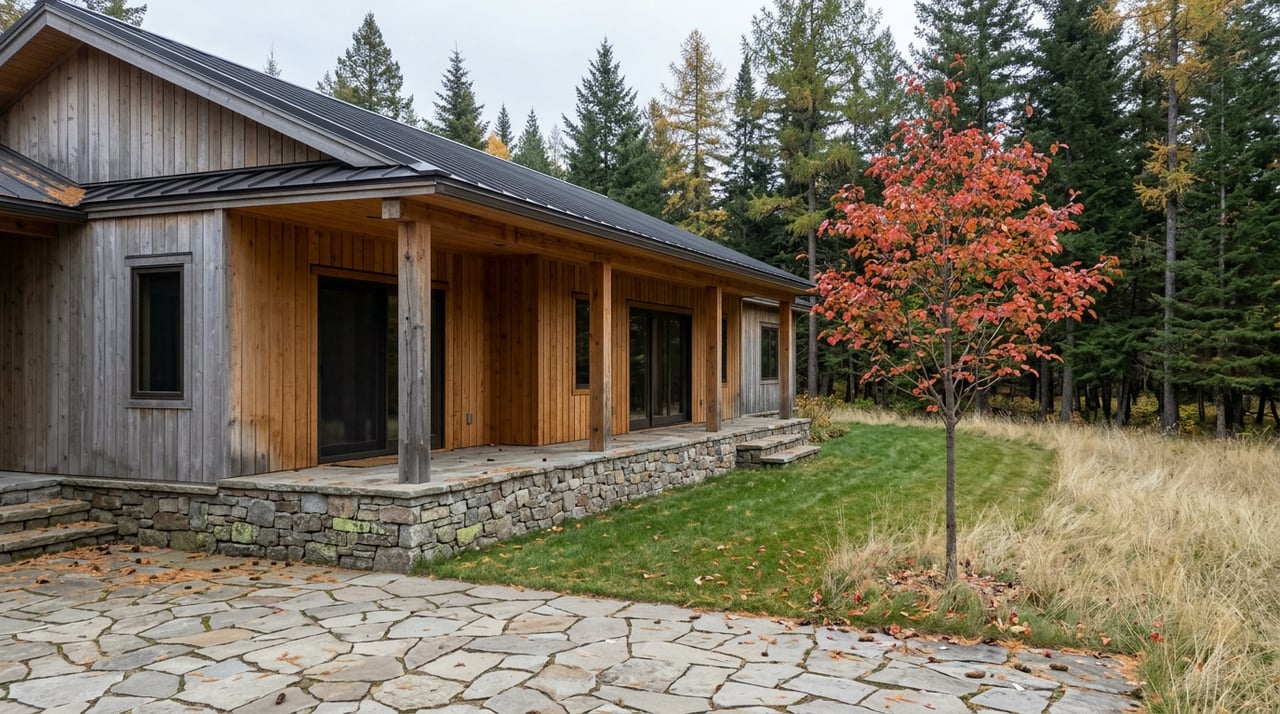
The most visible change at Pine Street Woods in 2026 is the Rotary Welcome Shelter, a timber-frame structure completed this year with support from the Sandpoint Rotary Club. It sits near the main entrance and functions as both a gathering point and a clear signal that you've arrived somewhere organized, which matters given how easy it's historically been to wander from one property to the next without noticing.
The land trust also redesigned its Summer and Winter Syringa Trail Maps this year, working with local cartographer Lee France. The new maps include QR codes that link directly to Avenza Maps, so anyone standing at a junction confused about whether they're still on Pine Street Woods or have crossed into Sherwood Forest can pull out a phone and check instead of guessing. Because the published count now lists one more adjacent property, better navigation isn't a nice-to-have. It helps visitors make sense of a trail system whose boundaries are not always obvious.
Separately, the land trust purchased the Aster Garden Center this year as part of a mission-driven venture tied to conservation and education work, not primarily a trail-related move but another example of the organization's work beyond the trail system.
Here's how the pieces actually break down on paper:
| Property | Approx. Acreage | Ownership | Primary Use |
|---|---|---|---|
| Pine Street Woods | 180 | Kaniksu Land Trust | Hiking, dog walking, nordic skiing (winter) |
| Sherwood Forest | 140 | Private (Kubiak family, 2012 easement) | Hiking, biking |
| VTT | 100 | Private (Meyer family, purchased 2020) | Mountain biking |
| Additional adjacent property (per current count) | Unspecified | Not specified in the count | Not yet fully documented publicly |
If the ownership patchwork weren't enough, there's a jurisdictional wrinkle too. The historic Pine Street ski and sled hill, tied to the original Weisz family homestead that Pine Street Woods itself was purchased from, sits under Dover's city government rather than Sandpoint's. This year, following community input and formal approval from the Dover City Council, work began on a Sled Hill Master Plan: expanded parking, a new vault toilet, an upgraded access road, and a new perimeter trail around the sled hill's pond.
It's the same broader tradition of public land access that Pine Street Woods represents, restored on a parcel that's been informally open to sledders for roughly half a century. But because it falls inside Dover rather than Sandpoint, any changes to it go through an entirely separate city council. Two properties that feel like the same forest to anyone using them are, administratively, answering to two different governments.
Some of these changes are harder to see once the snow comes. Sandpoint Nordic Club's grooming season typically starts once conditions allow, and after that the sled hill work and the reshuffled property lines are harder to make out under a few feet of white. Right now, in the dry weeks between Fall Fest and the first real snowfall, is the easiest stretch of the year to actually see what changed. The new Rotary shelter is standing and accessible. The redesigned trail maps are up at the kiosks. The sled hill improvements in Dover are visible mid-construction rather than buried.
If you've lived in Sandpoint for years and have always thought of Pine Street Woods as one continuous, simply-run forest, this is the season to walk it again with the actual ownership map in mind. It changes how you read the place. That shelter isn't just a nice building. It gives the main entrance a visible landmark in a network where property boundaries are not always obvious.
We love this stretch of trail for the same reason most of you do: it's five minutes from downtown and it never feels like it. If you're a longtime Sandpoint resident who's ever wondered what a home near this corridor is actually worth in today's market, or you're weighing a move closer to the Syringa system, Gove & Co is always glad to talk it through. Reach out anytime for a private market review, no obligation, just a conversation with people who know this ground as well as you do.
Stay up to date on the latest real estate trends.


Join a trusted team committed to making your Idaho real estate journey smooth, efficient, and personalized to your needs.